Environment
Biodiversity
Biodiversity
Basic Policy
In its Environmental Charter, KJRM recognizes the Earth as its most important stakeholder and states: "We recognize the critical importance of what ecosystems can provide and are committed to protecting ecosystems and mitigating any potential impacts on biodiversity."
Taking into account the relationship between the natural environment and business activities, KJRM strives to conserve biodiversity through green space management, environmental conservation, and consideration for the local environment at its portfolio properties.
Information Disclosure Based on TNFD Recommendations
JMF discloses nature-related information with reference to the TNFD framework. In addition to the general requirements that apply across all recommended disclosures, disclosures are organized in accordance with the structure of the recommended disclosures, which consist of 'Governance,' 'Strategy,' 'Risk and Impact Management,' and 'Metrics and Targets.'
General Requirements: Matters that are expected to be considered to ensure consistency in disclosed information
Governance: Governance of nature-related dependencies, impacts, risks and opportunities
Strategy: Impacts of nature-related dependencies, impacts, risks and opportunities on the business
Risk and Impact Management: Processes for identifying, assessing, prioritizing, and monitoring nature-related dependencies, impacts, risks and opportunities
Metrics and Targets: Metrics and targets used to assess and manage nature-related dependencies, impacts, risks and opportunities
General Requirements
1. Application of Materiality
Based on the Mission Statement and Sustainability Basic Policy, JMF has identified material sustainability issues (materiality) to be addressed through its business activities. Environmental materiality topics include 'Climate Change Response,”Biodiversity”,”Resilience”,”Water Resources”,and “Waste”, which are recognized as important issues for realizing a sustainable society. In identifying materiality, JMF prioritizes issues based on their impact on business operations, while taking into account stakeholder and social significance.
For details, please refer to “Materiality”.
2. Scope of Disclosures
In analyzing nature-related issues, JMF focuses primarily on the real estate management sector, covering properties it has invested in and operates. While JMF recognizes the importance of analysis covering the entire value chain, given constraints in data acquisition and the complexity of analysis, it is currently proceeding step by step, starting with a scope that is analytically feasible, centered on assets owned and managed by JMF.
Taking into account JMF's asset portfolio, JMF has provided an overview of the interfaces with nature and potential risks and opportunities for the Omotesando, Narashino, Fujisawa, and Osaka areas. In the scenario analysis, a qualitative assessment was conducted for all portfolio properties regarding the impact of nature-related issues on business activities. Based on this, detailed analysis of nature-related issues has been conducted with priority focus on Twin 21, which has been identified as a priority location.
3. Integration with Other Sustainability-related Disclosures
JMF believes it is important to address climate change, biodiversity, and other environmental issues in an integrated manner, being mindful of their relationships and trade-offs rather than treating them as individual issues. JMF has conducted climate-related analysis and disclosures based on the TCFD recommendations, and will continue to progressively consider the integration of nature-related and climate-related issues going forward.
4. Time Horizons
Short-term: 1 year / Medium-term: up to 10 years / Long-term: up to 2050
5. Stakeholder Engagement
JMF is committed to building good relationships with a diverse range of stakeholders. For information on stakeholder engagement and KJRM's approach to human rights, please refer to “Communication with Stakeholders” and “Approach to Human Rights”.
Governance (Integrated TCFD/TNFD Disclosure)
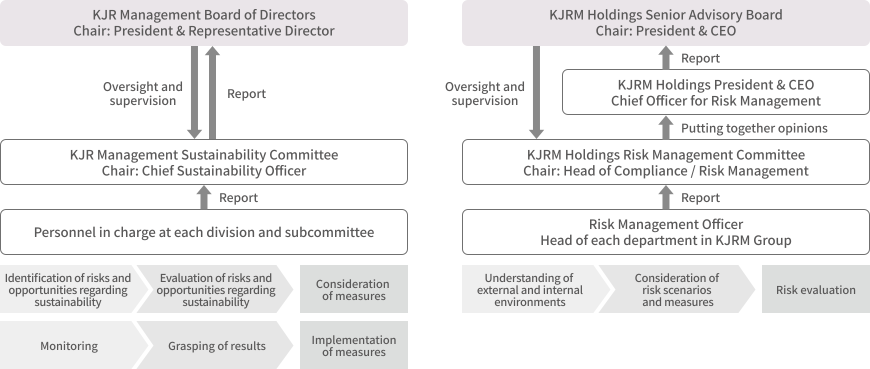
System of Supervision by the Board of Directors of KJRM Holdings / each investment corporation
The matters resolved by and reported to the Sustainability Committee chaired by the Chief Sustainability Officer (CSO) are overseen and supervised by being reported as needed to the Board of Directors of KJRM Holdings, which is chaired by the President & CEO who also serves as CSO and meets at least once every three months, as well as the Board of Directors of the investment corporation, which meets at least twice a month in principle.
The Sustainability Committee
The Sustainability Committee, which is held once a quarter in principle, identifies material dependencies, impacts, risks and opportunities related to sustainability, including climate change and natural capital and plays a central role in sustainability activities by resolving policies, strategies, systems, and goals, and monitoring KPIs. For details, please refer to “Sustainability Promotion Structure”.
Engagement
In addressing nature-related issues and other sustainability challenges, KJRM places importance on communication with stakeholders, including local communities, tenants, and PM and BM companies. Engagement is carried out at managed properties, taking into account local characteristics and consideration for the surrounding environment.
In addition, based on the Sustainable Procurement Policy, KJRM promotes respect for human rights and consideration for biodiversity in procurement activities related to JMF's business operations, including supply chains.
For details, please refer to “Communication with Stakeholders” and “Sustainable Procurement Policy”.
Risk Management (Integrated TCFD/TNFD Disclosure)
Organizational Processes for Identifying and Assessing Environment-related Risks
The status of dependencies and impacts on environmental issues and identified risks and opportunities are assessed based on business activities, local characteristics, and interfaces with nature. In addition, with respect to natural capital, priorities are established taking into account relationships with sensitive locations. Analysis and assessment are conducted primarily by sustainability staff, taking into account the characteristics of JMF's managed assets. Currently, analysis is centered on real estate leasing activities; analysis covering the value chain will be progressed in stages, taking into account constraints in data acquisition and the complexity of analysis. The status of dependencies and impacts, identified risks and opportunities and their degree of impact, and priority locations are discussed and confirmed by the Sustainability Committee.
Organizational Processes for Managing Environment-related Risks
Led by the person in charge of sustainability, we establish meetings (hereinafter referred to as "subcommittees") as necessary to discuss and examine in detail sustainability-related issues, including environment-related issues, and approaches to promoting sustainability at the working level, either within a division or in cooperation with other divisions. Through the subcommittees, individual issues are discussed and information is shared to raise awareness and understanding among those in charge, while integrating sustainability considerations into the daily investment and asset management processes.
Matters discussed and considered by the subcommittees are reported to the Sustainability Committee, which monitors their progress.
In addition, JMF collects and monitors environmental data for their properties on a monthly basis. To promote initiatives related to environmental matters, including climate change-related metrics, targets, and initiatives, and to collect environmental data, JMF and have established an Environmental Management System and continuously strengthen and improve these initiatives through the implementation of the PDCA cycle.
In addition, at the priority locations identified Twin 21 regular monitoring of flora and fauna is conducted to understand the natural environment within the green spaces of these properties.
Integration into Overall Risk Management
We operate the Risk Management Committee at KJRM Holdings, the holding company of the asset management company, as a forum for identifying and examining matters related to major risks and formulating countermeasures and management policies. The Committee is composed of senior management personnel and utilizes the Risk Control Matrix (RCM) to review, once every three months, the status of environment-related dependencies, impacts, risks, and opportunities, including those related to climate change and biodiversity, as well as other risks and opportunities affecting business operations. These matters are then reported to the Committee for evaluation and management.
Analysis Using the LEAP Approach
LEAP Approach
JMF recognizes that human life and economic activities are founded on natural capital, including biodiversity.
The TNFD recommendations encourage the use of the 'LEAP approach' as a means of identifying and assessing the relationship between business activities and nature. With reference to this process, JMF analyzed dependencies and impacts on nature based on interfaces with nature, and identified priority locations.
Assessment of Dependencies and Impacts
To assess dependencies and impacts on natural capital in the sector to which JMF belongs, JMF used 'ENCORE,' a representative tool recommended for use in the TNFD recommendations, to assess the degree of dependency and impact. JMF considered dependencies on and impacts to natural capital that merit attention in the real estate sector, with direct operations defined as real estate business activities involving owned or leased properties. In these considerations, the status of relevant initiatives at JMF was also taken into account in identifying dependencies and impacts.
Heat Map of Dependencies and Impacts
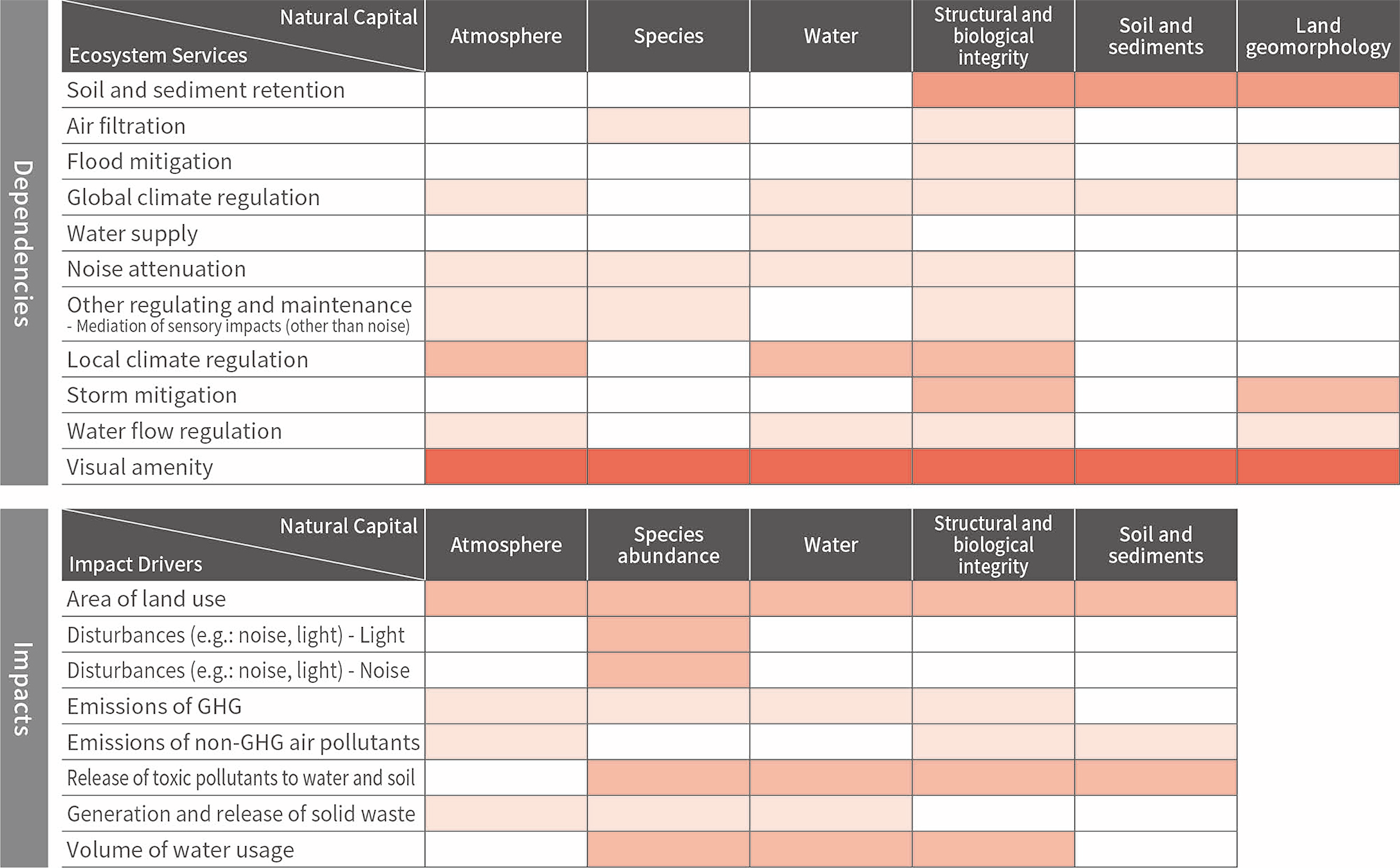
- Heat Map of Dependencies and Impacts (created using ENCORE)
ENCORE Partners (Global Canopy, UNEP FI, and UNEP-WCMC) (2024). ENCORE: Exploring Natural Capital Opportunities, Risks and Exposure. [yOn-line], July 2024, Cambridge, UK: the ENCORE Partners. Available at: https://encorenature.org.
DOI: https://doi.org/10.34892/dz3x-y059.
In the current analysis, visual comfort is assessed as a high-dependency item. In the real estate business, visual elements such as landscapes and green spaces play an important role in providing an attractive environment for residents and users. Locations rich in nature, such as areas surrounded by greenery or near parks, are considered one of the elements that enhance the appeal of real estate assets. In addition, it is recognized that land use and water use in real estate operations may have a certain impact on species, water, and habitats. Based on the relationship of dependency on and impact to natural capital, potential risks and opportunities for the business arising from future changes in the natural environment were identified.
Interface with Nature
Three evaluation criteria related to nature were established, and all assets in the JMF portfolios were assessed. Based on the results, potential priority location candidates were selected, and taking into account proprietary considerations such as relationships with sensitive locations and acquisition prices, Twin 21 was identified as priority locations.
Evaluation Items for Interface with Nature
This table can be scrolled sideways.
| Evaluation Item | Data and Sources Referenced |
|---|---|
| Dependencies on and impacts to natural capital | ENCORE assessments, GHG emissions, water consumption, waste volume, land area |
| Geographic location | Protected areas (nature conservation areas, wildlife protection areas, important marine areas, etc.), Key Biodiversity Areas (KBAs) |
| Water risk | Aqueduct water risk atlas (Water Stress) |
Based on ENCORE assessments, the dependency and impact relationships between business operations and natural capital were identified, and quantitative data on GHG emissions, water consumption, waste volume, and land area were used to assess the environmental footprint of each property. The relationship between properties and protected areas was also examined, along with water risk in the areas where properties are located (total water withdrawal in the watershed ÷ renewable water resources), and a comprehensive assessment was conducted from the perspective of future business risk.
Strategy
Scenario Analysis
JMF is conducting scenario analysis based on the TNFD recommendations to understand the impact of nature-related issues on its business activities.
The TNFD recommendations require organizations to 'describe the resilience of the organization's strategy to nature-related risks and opportunities, taking into consideration different scenarios.' On the other hand, unlike the TCFD recommendations, there are no unified normative scenarios. Therefore, with reference to the TNFD recommendations and external scenarios, the following two scenarios were established.
Nature Recovery Scenario
As interest in nature grows and policies become established, nature is broadly maintained and restored overall, though some vulnerable areas continue to degrade.
- Conservation of ecosystems and biodiversity advances
- Green space and biodiversity consideration progresses even in urban areas
- Disaster risk is suppressed and adaptation advances
- Typhoons, floods, and extreme heat days increase to some extent
Nature Degradation Scenario
Nature degradation continues and business impacts are becoming apparent, but policies have not taken hold and countermeasures remain ad hoc.
- Degradation of ecosystems and biodiversity continues / accelerates
- Damage from typhoons, floods, and extreme heat becomes more serious and frequent
- Water resource constraints become apparent
- Urban environment deteriorates (urban heat island effects, etc.)
[Referenced External Scenarios and Materials]
■ Transition Risks/Opportunities
TNFD 'TNFD Recommendations'
IPBES 'Global Assessment Report on Biodiversity and Ecosystem Services' (2019)
Ministry of the Environment 'Interim Evaluation of the Implementation Status of the National Biodiversity Strategy 2023-2030' (February 2026)
■ Physical Risks/Opportunities
ENCORE
The IPBES 'Global Assessment Report on Biodiversity and Ecosystem Services' (2019) is a report that scientifically shows the current state, causes, and future of biodiversity decline, and points to the difficult path to realizing a sustainable society in the face of the degradation of nature we face, while also suggesting the possibility of realizing a sustainable society through societal transformation. This report's scientific projections for the future of nature were referenced in conducting the scenario analysis. For information on the status and challenges of domestic biodiversity and future policy direction, the Ministry of the Environment's 'Interim Evaluation of the Implementation Status of the National Biodiversity Strategy 2023-2030' (February 2026) was referenced.
Stakeholder behavioral changes are defined based on the 'Nature Recovery Scenario' and 'Nature Degradation Scenario.'
| Nature Recovery Scenario (Transition Risks ↑ / Physical Risks ↓) |
Nature Degradation Scenario (Transition Risks ↓ / Physical Risks ↑) |
|||
|---|---|---|---|---|
| Government / Authorities |
Regulatory tightening and institutionalization of nature-positive policies
|
Inadequate preventive measures and sudden regulatory tightening
|
||
| Investors / Financial Institutions |
Progress in capital allocation reflecting natural capital risks and opportunities
|
Stricter investment decisions focused on physical risks
|
||
| Tenants |
Expansion of green leases and increased demand for environmentally conscious offices
|
Conservative property preferences driven by safety and BCP priorities
|
||
| PM / BM |
Increased operational burden and costs due to advancing nature-related initiatives responses
|
Increased operational burden and costs due to expanded disaster response and resource constraints
|
||
| Real Estate Industry |
Strengthening of environmental regulatory compliance and acceleration of sustainability responses initiatives
|
Asset selection and cost increases driven by expanding physical risks
|
Based on these scenarios, a qualitative analysis was conducted on the risks and opportunities that nature-related issues may pose to assets owned and managed by JMF. An assessment of response measures for identified risks and opportunities was also conducted.
Financial Impact Assessment and Response Measures
JMF conducted a qualitative assessment of the impact of nature-related issues on business activities and examined response measures for assets held as direct operations.
This table can be scrolled sideways.
| Classification | Risk/ Opportunity Item | Change in Cash Flow (Qualitative) |
Risk/ Opp. |
1:Nature Recovery Scenario |
2:Nature Degradation Scenario |
Efforts and measures | |||
|---|---|---|---|---|---|---|---|---|---|
| Medium term (~10 yrs) | Long term (2050) | Medium term (~10 yrs) | Long term (2050) | ||||||
| Transition Risks/ Opportunities | Policy | Increase in regulatory compliance costs | Increase in compliance costs due to tightening environmental regulations | Risk | Medium | Medium | - | Medium |
|
| Increase in operational environmental compliance costs (certification acquisition, green space management, etc.) | Risk | Small | Medium | - | Small | ||||
| Improvement of property competitiveness through environmental regulatory compliance | Opportunity | Small | Medium | - | Medium | ||||
| Market | Changes in awareness of nature among market participants | Increase in financing costs due to lower valuation of properties with high environmental impact | Risk | Small | Medium | - | Small | ||
| Changes in awareness of nature among tenants | Extended vacancy periods at properties with low environmental performance due to nature and environmental performance screening at occupancy | Risk | Small | Medium | - | Small | |||
| Increase in appraised value and average rent for properties with high nature consideration and environmental performance | Opportunity | Small | Medium | - | - | ||||
| Technology | Spread of environmental impact reduction technologies | Increase in various implementation costs due to environmental impact reduction measures | Risk | Small | Large | - | Medium |
|
|
| Reduction in utility costs such as water and electricity through environmental impact reduction measures | Opportunity | Small | Large | - | - | ||||
| Reputation | Decline in credibility due to delayed environmental measures | Decline in asset value of properties with high environmental impact | Risk | Small | Medium | - | Medium |
|
|
| Litigation costs arising from adverse impacts on the surrounding environment due to delayed environmental measures | Risk | Medium | Medium | - | Medium |
|
|||
| Revenue increase and reduction in financing costs through improved selectivity as surrounding environmental quality improves through promoting environmental measures | Opportunity | Small | Large | - | Small |
|
|||
| Physical Risks/ Opportunities | Acute Risks |
Increase in typhoons, heavy rainfall, storm surges, floods, and inundation | Increase in repair and prevention costs, and insurance premiums | Risk | Medium | Medium | Medium | Large |
|
| Improvement of market competitiveness through implementation of BCP and resilience strengthening measures | Opportunity | Small | Medium | Small | Medium | ||||
| Occurrence of infectious diseases | Decrease in rent due to operating losses | Risk | Small | Medium | Medium | Medium | |||
| Chronic Risks |
Rise in average temperature | Increase in air conditioning maintenance, repair costs, and utility costs due to increased cooling demand | Risk | Medium | Medium | Medium | Medium |
|
|
| Changes in precipitation | Decrease in rent due to operating losses | Risk | Small | Medium | Medium | Medium | |||
Short-term impacts from nature-related issues are currently considered to be limited.
The implementation of quantitative analysis of nature-related issues and the expansion of the scope of analysis to include the value chain will be considered in stages, taking into account the external environment and the status of data preparation.
Initiatives at Priority Location (Twin 21)
With reference to the LEAP approach of the TNFD recommendations, a qualitative assessment of nature-related dependencies, impacts, risks and opportunities has been conducted for the entire portfolio, as described in the scenario analysis above. In addition, given the highly location-specific nature of nature-related issues, a separate, detailed assessment tailored to local characteristics has been conducted for the priority location. For JMF, the following assessment was conducted for Twin 21, identified as the priority location.
All areas where JMF's properties are located meet at least one of the criteria for a sensitive location and could thus be a candidate priority location. However, based on the scale of green spaces, the status of certification acquisition (Association for Business Innovation in harmony with Nature and Community (hereinafter referred to as "ABINC") certification obtained in 2025), relationships with surrounding nature, and other dependencies and impacts on nature, Twin 21 in the Osaka area has been identified as the priority location.
[Transition Risks/ Opportunities]
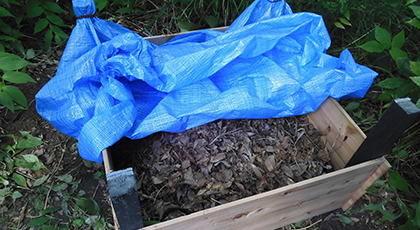
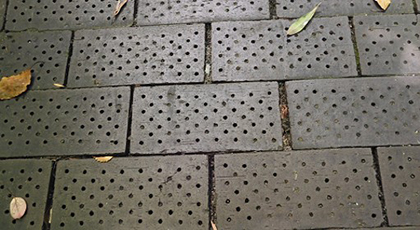
Policy | Increase in regulatory compliance costs: Green spaces compliant with Osaka Prefecture's Basic Plan have been established, and ABINC Certification was obtained in 2025. The site features green spaces exceeding 6,000 m² (biodiversity contribution area ratio of 20% or more), and efforts are made toward material cycling within the site through the use of permeable paving and the installation of a compost yard for composting fallen leaves.
For details, please refer to “environmental certifications”.
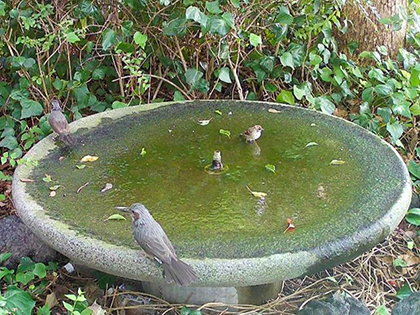
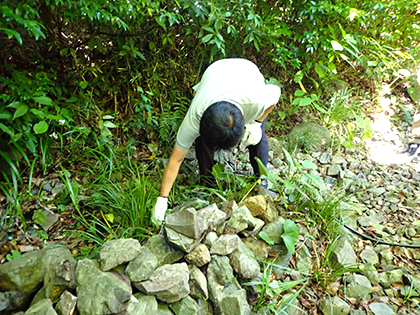
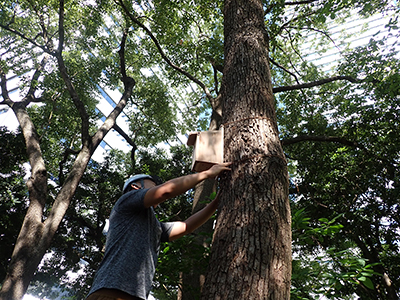
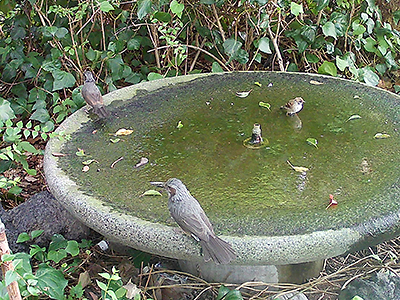
Market | Changes in awareness of nature among market participants and tenants: While located in an urban area, JMF maintains relatively large green spaces in good condition, contributing to urban green space conservation. The green spaces feature a four-layer hierarchical structure—from the tree canopy layer to the herbaceous layer—predominantly planted with native species. Indicator species (8 species including birds and others) have been established through biological surveys, and wildlife-friendly facilities such as birdhouses, birdbaths, and stone piles have been installed, reflecting a commitment to biodiversity-conscious management.
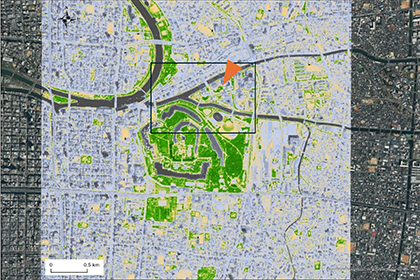
NDVI (Normalized Difference Vegetation Index, calculated using the light reflection characteristics of plants) was calculated using satellite imagery to examine the distribution of green spaces in the area surrounding Osaka Castle, where Twin 21 is located. The results show abundant green spaces around Osaka Castle.
- CNES (2025), Distribution Airbus DS
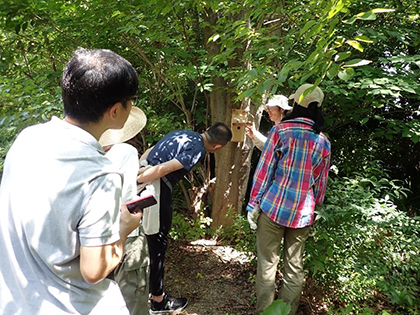
Market | Regional collaboration and ecosystem network: Twin 21's green spaces are positioned as a node in the ecosystem network connecting Osaka Castle Park and Kema Sakuranomiya Park. Indicator species surveys are conducted in collaboration with specialist institutions, and maintenance is carried out based on invasive species management manuals and green space management manuals. Furthermore, through the Osaka Business Park (OBP) Association, JMF is advancing community-linked initiatives such as providing flower beds and hosting biodiversity events, as well as implementing employee activities in the green spaces.
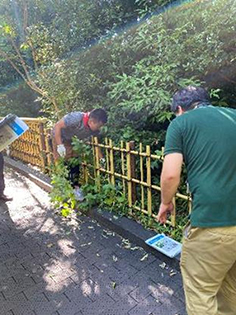
Technology | Spread of environmental impact reduction technologies: Environmentally conscious measures including the adoption of LED lighting are being implemented.
Reputation | Decline in credibility due to delayed environmental response: Through engineering reports at the time of property acquisition, the absence of nature-related impact risks such as water quality and soil contamination has been confirmed. In addition, low-toxicity pesticides and herbicides are selected in consideration of impacts on ecosystems, and only used in a spot-specific manner on a minimum-impact basis when pests occur, reflecting efforts toward appropriate chemical management.
[Physical Risks/ Opportunities]
Acute | Increase in typhoons, heavy rainfall, storm surges, floods, and inundation: Permeable paving has been adopted in part of the site, enabling rainwater infiltration into the ground and contributing to the suppression of stormwater runoff including from surrounding areas.
Acute | Occurrence of infectious diseases: The development and maintenance of outdoor green spaces in an urban office district contributes to enhancing the comfort of the surrounding environment. In addition, efforts are made to maintain the safety and comfort of tenants through ventilation and hygiene management.
Chronic | Rise in average temperature: Continuous tree canopies with trees over 10 meters tall covering the ground surface contribute to suppressing rises in land surface temperature. Evergreen trees are planted along the arterial road on the southern side to mitigate high temperatures and dryness inside the site.
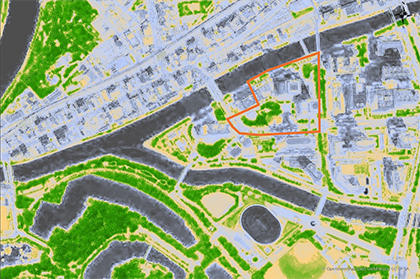
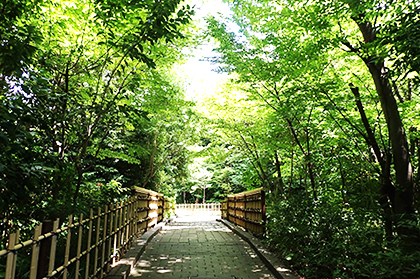
- CNES (2025), Distribution Airbus DS
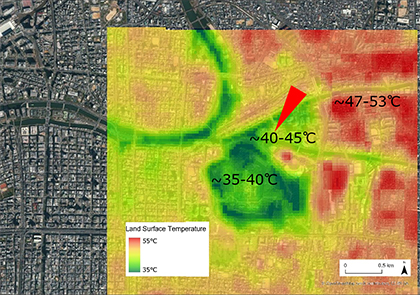
Land surface temperatures in summer were compared around Osaka Castle. The land surface temperature in the Osaka Castle area was approximately 38–40°C (the lowest), while the area around Twin 21 was 42–44°C. The area directly to the east exceeded 50°C, confirming that areas with established green spaces contribute to urban heat island mitigation.
- Landsat 8 imagery provided by the U.S. Geological Survey (USGS) via Google Earth Engine.
Chronic | Changes in precipitation: Permeable paving and the water retention function of green spaces contribute to adaptation to changes in precipitation. Climate change scenarios are reviewed periodically, and responses are being considered.
Metrics and Targets
JMF has set environment-related metrics and targets as shown below.
Going forward, we will continue to examine metrics for managing nature-related dependencies, impacts, risks and opportunities, with reference to the disclosure metrics recommended by the TNFD.
This table can be scrolled sideways.
| Metrics | Target | Performance | TNFD Measurement Indicator No. |
|---|---|---|---|
| GHG Emissions | Reduce total GHG emissions by 42% compared to FY2020 Achieve an annual reduction rate of 4.2% year-on-year (Scope 1 & 2,Target year: 2030) |
Environmental Performance | - |
| Water consumption | Prevent year-on-year increases in water consumption | C2.1 | |
| Waste volume | Prevent year-on-year increases in waste volume | C2.2 | |
| Recycling rate | Improve recycling rate year-on-year | C2.2 | |
| Biodiversity-related certifications | Maintain existing certifications | Initiatives for Biodiversity | C1.1 |
| Ratio of environmentally certified properties | Maintain an environmentally certified property ratio of 65% or higher (Target year: 2030) | Environmental Certification | A15.0 |
Initiatives for Biodiversity
JMF recognizes the critical importance of what ecosystems can provide, and we are committed to protecting ecosystems and mitigating any potential impacts on biodiversity.
In addition, to provide peace of mind to our customers, we are actively adding greenery to our facilities and creating parks and other communal spaces.
Initiatives at Twin 21
At Twin 21, JMF investigates community green space plans and the situation in nearby green spaces before examining its activities for green spaces. Taking into account collaboration with nearby green spaces, JMF has installed birdhouses and birdbaths, and its employees carry out activities in the green spaces.
Twin 21 received ABINC certification.
Main points evaluated in ABINC certification
- The good maintenance of a relatively large green space in an urban area.
- Detailed study of the contribution to biodiversity in the area, and a clear vision of future goals.
- Implementation of water circulation-conscious measures, such as permeable pavement.
- Proactive efforts to promote material recycling on site, such as composting, etc.
- Active employee participation.
- Regional cooperation through local councils.
For details of Environmental Certifications, please see.
Community Engagement
Nara Family: Comprehensive cooperation agreement with Nara City
Round1 Stadium Sakai Chuo Kanjo: Signed agreement with Osaka Prefectural Government for the conservation and restoration of the natural environment.
Greening of rooftops and entrances

The greening of rooftops and entrances and the bedding of various flowers and plants throughout the year creates a visually appealing environment for customers. JMF can also expect to benefit from such greening as it encourages shopping by customers who come to various events that are held in open spaces on a regular basis.

JMF strive to put a green spaces environment in place in our properties and increase the kinds of plants and green spaces, while including local trees, etc. when planting.
Protection of Native Species

When planting at our properties, JMF makes sure to transplant any native plants that were replaced to new areas and promote the greening of our properties with consideration given to biodiversity.